


Guru
Founder, Vynlox
How to win the Google Map pack as a dental practice
Most Australian dental practices rank somewhere on Google. Few rank consistently in the local 3-pack. The difference between page three and position one is usually the same effort applied to the right channel. The Map pack sits above organic results. Getting there compounds: more visibility, more local calls, more booked appointments. Here's how to get there, and how fast.
For a deeper walkthrough on building SEO foundations across all channels, see the complete dental SEO guide.
Free SEO audit · No obligation
Curious how your site ranks today?
We'll audit your current SEO, identify the biggest opportunities, and send the report. Free, no obligation.
Get a Free SEO AuditWhy Healthengine and paid ads trap most practices
Most Australian dental practices spend $800 to $1,500 per month on paid Google Ads while their Google Business Profile sits neglected. They run ads because results are immediate. A click comes from a budget spend, and you can feel the lever working. Local SEO feels slower. It is slower at first. But here's the trap: paid clicks stop the moment the budget runs out. You're on an ad-spend treadmill that compounds every month into years. Meanwhile, a properly optimised Google Business Profile, location pages, and local citations build an asset. That asset doesn't require feeding. New appointments arrive through booked slots, reviews, and repeat clients long after the first three months.
Local SEO for dental practices has a different timeline than paid ads. Healthengine and its competitors take commission (typically 15 to 20 percent on each booking). They push you toward their platform because they own the traffic. Google Business Profile owns traffic too, but you own the channel.
The mechanics are straightforward. A patient in Mosman searches "dentist near me" or "dental implants Mosman" on their phone. Google returns results ranked first by relevance (does the listing match the search?), second by distance (how close is the practice?), and third by prominence (how many reviews, how high the rating?). You can influence all three. Here's the playbook.
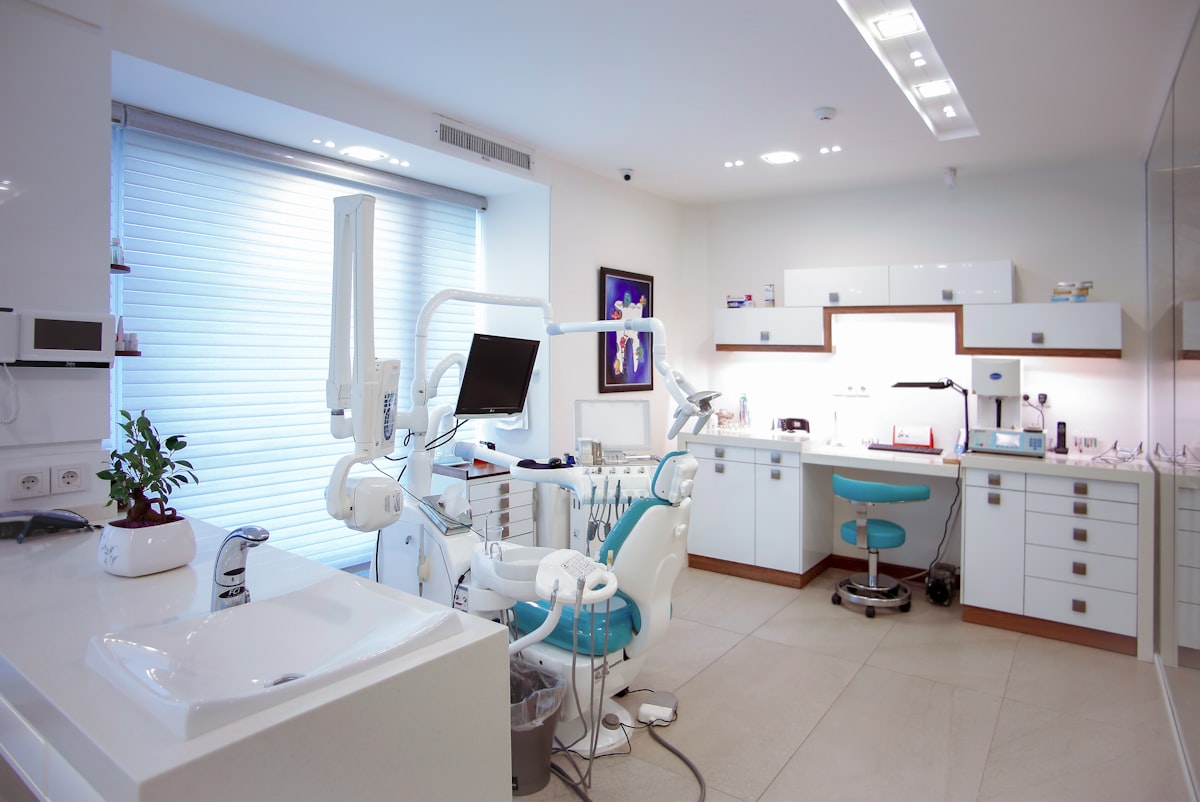
The local SEO playbook for dental practices
1. Claim and optimise your Google Business Profile
Start here. If you haven't claimed your GBP, do it now. Log into Google My Business, verify you own the practice, and fill every field. Upload photos of the waiting room, treatment areas, and team. Write a description that includes the words people search for: cosmetic dentist, implants, general dentistry, children's dentist (if applicable). Add your services to the profile so Google knows what you do.
This alone moves the needle. A complete, photo-rich GBP ranks higher than an empty one. Patients also read your reviews on the GBP before calling. Respond to every review (positive and negative) within 48 hours. A response shows you care. Negative reviews that get a thoughtful reply often convert to phone calls from patients who see you're willing to fix problems.
2. Build location-specific landing pages
If you have multiple locations, create a dedicated page for each. A Mosman practice needs a Mosman page. A Darlinghurst location needs a Darlinghurst page. Each page targets local search intent: "dentist in Mosman", "emergency dentist Mosman", "teeth whitening Mosman". Include the suburb name three to five times on the page (title, H1, first paragraph, meta description). Link each location page back to your main services pages and our SEO retainer to consolidate authority.
The page should address local trust: how long you've been in the suburb, photos of the location, team bios, community involvement. A practice that's been in Mosman for ten years should say so. That's a local signal.
3. Earn local citations
Citations are directory listings: health directories, dental associations, local business listings, maps. Google uses these to verify your practice exists, your address is correct, and your phone number is consistent. Build a spreadsheet of the major ones and fill them all in:
- Australian Dental Association directory
- Healthgrades Australia
- Zocdoc (if available in your area)
- Local chamber of commerce
- Suburb-specific directories
Consistency is key. If your address is "123 Main Street, Mosman, NSW 2012" on your GBP, it must be exactly the same everywhere. A variation triggers a confidence drop in Google's eyes.

4. Collect and manage reviews
Google's algorithm weighs review velocity and rating. A practice with 50 five-star reviews ranks higher than one with ten. The fastest way to build this is to ask every patient who books an appointment to leave a review. Send an email 48 hours after their visit with a direct link to your GBP review section. Make it a habit: phone call confirmation, follow-up text, email link. Practices that systemise this see a review come in every two to three days.
For comparison with other approaches to patient acquisition, see our SEO for plumbers guide, which uses the same review-velocity strategy for tradies.
5. Link internal pages strategically
Your location pages should link to your services pages: cosmetic dentistry, implants, root canals, etc. Your services pages should link back to your location pages. This internal linking helps Google understand the relationship between locations and services. A Mosman patient searching "root canal Mosman" lands on your location + service page. That's the ideal outcome.
When you're ready to accelerate all of this across web design and local optimization, book a free proposal to see where your practice stands today.
How to measure and track local SEO progress
Success is trackable. Set a baseline now and measure again every four weeks.
| Metric | How to track | Baseline | Goal (3 months) |
|---|---|---|---|
| Map pack position | Search "dentist [suburb]" on mobile, note your ranking | Current | Top 3 |
| GBP reviews | Count reviews in Google Business Profile | Current count | +10 to 20 reviews |
| Phone call volume from Google | Use call tracking in your PPC account or manual log | Current calls | +30 to 50% |
| Local search impressions | Google Search Console, filter by local search queries | Current | +100% |
Set up Google Search Console if you haven't already. It shows exactly what local searches put your practice in front of patients. "Dentist Mosman" gets 50 impressions monthly? You're visible. Focus next on position (moving that from position 5 to position 1). Every rank position up typically adds 20 to 30 percent more clicks.

The timeline varies. Some practices see map pack movement in four weeks. Others take 8 to 12 weeks. The gap usually comes down to how many reviews you have (do you already have 30+?) and how many local citations you've built. A practice starting from scratch needs four to six months of compounding work. A practice with a foundation (50+ reviews, clean citations) can hit the map pack in six to eight weeks.
This is exactly what we did for Elevate Exteriors (visit them at elevate-exteriors.com.au): they combined local SEO with a site rebuild and saw 15 to 20 qualified leads per month by month five and the curve kept climbing from there. The same playbook works for dental practices, and the results are just as measurable.
If you want our SEO retainer running this for your practice, the audit shows you exactly where you sit before any commitment.
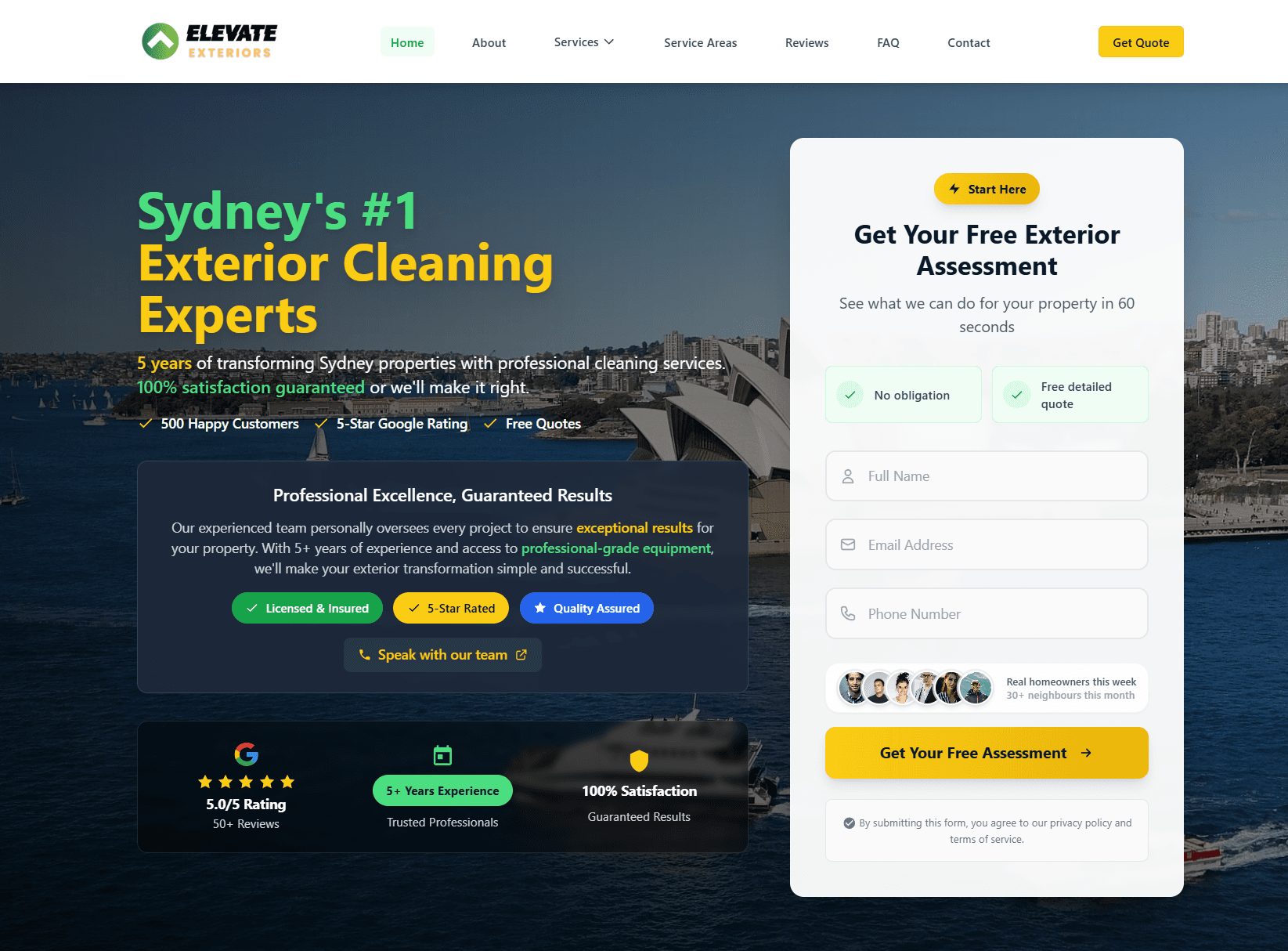
Real client. Real results.
Elevate ExteriorsExterior Services
Website rebuild + SEO foundations. After a 4 to 6 month build phase, now generating 15 to 20 qualified leads per month from organic search. No ad spend, lead quality consistently higher than paid traffic.
Quick answers
Frequently asked questions
Tagged with
Written by
Guru, Founder at Vynlox
Sydney based · 8+ years building websites · 100% client retention
I started Vynlox after watching too many good Australian businesses get burned by agencies that send reports, not results. Every strategy call you book is with me directly. You won't be handed off to a junior. You work with me.


