

Vynlox
Founder, Vynlox
What Is Answer Engine Optimisation (AEO)? The 2026 Australian Guide
Answer Engine Optimisation (AEO) is the practice of structuring your website content so AI search engines and direct-answer features (ChatGPT, Perplexity, Google AI Overviews, featured snippets, People Also Ask) cite your business as the answer. Here is the longer version with the parts most articles skip.
For six years, Google search meant ranking on page one. Today, ChatGPT and Perplexity answer questions before users ever see a blue link. Your job now is to get cited. If an Australian dentist asks "best dental implant aftercare", Perplexity answers from five sources. If your blog is one of them, you get qualified leads without driving traffic to Google first.
Free AI visibility check
Are you showing up in ChatGPT and Google AI?
We'll check whether AI search engines are recommending your business. Free, no obligation, results in 1 business day.
Get a Free AI Visibility CheckThis guide covers the full AEO playbook, why it matters in 2026, how it differs from SEO, and exactly what to expect in terms of timeline and results.
What Is AEO and How Does It Differ From SEO and GEO?
SEO (Search Engine Optimisation) is the practice of ranking on Google's blue-link results page. You target keywords like "dentist Canberra" and try to land in positions one to three on Google.
GEO (Geographic Optimisation) is SEO focused on local search: your Google Business Profile, local citations, reviews, and location-specific keywords so you show up in the map pack.
AEO (Answer Engine Optimisation) is about getting cited directly inside AI tools and zero-click answer boxes. When an Australian business owner asks ChatGPT "how do I improve my Google ranking", Perplexity cites your blog post or website. When someone asks "is SEO worth it for small businesses", Claude or Google AI Overviews quotes your article. You do not need traffic to your site, the AI tool quotes you directly to millions of users.
The three often overlap. Many pieces of content rank in Google AND get cited in AI overviews AND show up in the map pack. But the ranking factors, content structure, and measurement methods are different enough that you need a separate strategy for each.

Why AEO Matters Now (2026)
Three years ago, AEO was optional. Today it is not.
ChatGPT hit 100 million users faster than any app in history. Perplexity is catching up. Google's AI Overviews now appear in 92% of US queries. Australian search behaviours have shifted. Your prospects do not ask Google "dentist Sydney", they ask ChatGPT "what are the signs I need a new dentist" and an AI tool answers. If your website is not cited in that answer, you miss the lead entirely.
Zero-click answers mean you must be visible inside the AI layer, not just on the search results page. Traditional SEO still works (Google still sends traffic), but AI referrals are often higher-quality because they come from someone who is mid-research, asking detailed follow-up questions, and actively evaluating options. RyRo Loan Centre (visit them at ryroloancentre.com.au) saw this firsthand: ChatGPT referrals were the highest-quality leads of all channels with the lowest friction and fastest decision cycles.
AI search is still young and underoptimised. Most businesses have not even heard of AEO. You have a narrow window to be the cited source in your vertical before competitors catch up.
The 8-Part AEO Playbook
AEO is not magic. It is a deliberate structure applied to your website content. Here is the playbook we use:
1. FAQ Schema + Structured Data
AI tools scan structured data to understand your content before they read prose. If you wrap your FAQ answers in schema, Perplexity and Claude can parse them instantly.
Use JSON-LD FAQPage schema for every blog post FAQ. Use SchemaOrg snippets for your service pages showing pricing, turnaround, and common objections. When an AI tool indexes your site, it sees not prose but organised facts.
This is the single biggest leverage point in AEO. A blog post with no schema might get cited once. The same post with FAQ schema gets cited 10 times by different AI tools asking different variations of those questions.
2. Fact-Dense, Citation-Ready Content
AI tools cite you when your content answers the question better than other sources. "Better" means:
- Specific numbers (not "many" or "most"). Example: "22 leads in 90 days" beats "substantial results".
- Data from real cases. Example: "One client saw a 4x ROI in the first quarter" beats "ROI can be strong".
- Comparative data. Example: A table showing "AEO drives leads in 4-6 weeks; SEO in 3-6 months" beats prose saying both are fast.
- Australian context. Example: "Sydney dentists report..." or "Melbourne-based accounting firms see..." beats US-only examples.

3. Brand Mentions From Trusted Third Parties
AI tools love citations inside your own content. When your blog post links to Elevate Exteriors (visit them at elevate-exteriors.com.au) and cites their results, Perplexity sees "this is credible, it mentions a real business and real outcomes."
Reference case studies. Quote client testimonials. Link to partner companies. Real names and real businesses are what make content feel authoritative to AI.
4. Third-Party Citations and Backlinks
When external websites link to you and mention you by name, AI tools treat you as an authority. This overlaps with traditional SEO, but the mechanism is the same.
If you publish a strong AEO guide and digital marketing sites link to it saying "this is the best Australian resource on AEO", you get cited more often in ChatGPT and Perplexity.
5. Freshness Signals
AI tools prefer recent content. A guide updated in April 2026 beats an identical guide from April 2023.
If you publish a pillar piece on AEO in May 2026, keep it updated. Re-publish it every quarter with the latest AI tool behaviours, new data, and fresh examples. This signals to Perplexity and Claude that the content is still current and worth citing.
6. Conversational Query Targeting
People ask AI tools different questions than they ask Google. On Google, you target "AEO" or "AEO for businesses". In ChatGPT, people ask "is AEO better than SEO", "how do I make my website show up in ChatGPT", "how long does AEO take", and "what is the difference between AEO and Google ranking".
Structure your content to answer these conversational variations. Use FAQ sections with 8 to 12 questions. Write blog post headings that are questions, not statements.
7. Entity Disambiguation
AI tools understand entities (people, places, businesses, concepts). If your blog post talks about "Sydney" but does not link to anything or define Sydney, Perplexity does not know which Sydney you mean.
When you mention a place, concept, or person, provide context. Example: instead of "Sydney's top agency", write "Sydney, Australia-based marketing agency" or link to the relevant Wikipedia or business listing.
This helps AI tools understand the exact topic of your content and cite it more accurately.
8. Conversational Language (But Not Fluff)
AI tools scan for natural language patterns. A blog post that reads like it was written for a human (second person "you", specific examples, short sentences) gets cited more than a dry, formal tone.
But conversational does not mean padding. No "let's dive in" intros or "in conclusion" recaps. Write for clarity and directness.
AEO vs SEO vs GEO: A Quick Comparison
When do you focus on which strategy?
| Factor | AEO | SEO | GEO |
|---|---|---|---|
| Primary audience | AI tools (ChatGPT, Perplexity, Claude) | Google search results | Google Maps / local search |
| Time to first results | 4 to 8 weeks | 3 to 6 months | 2 to 4 weeks |
| Content type | Blog posts, pillar pages, FAQs | Service pages, blogs, case studies | Google Business Profile, local citations, reviews |
| Key ranking factor | FAQ schema, fact density, freshness | Backlinks, domain authority, on-page keywords | Reviews, location, local citations |
| Traffic type | Direct referrals from AI tools | Organic clicks from Google | Map pack clicks, local searches |
| Best for | Building thought leadership, brand mentions, lead quality | Sustained organic traffic, long-tail keywords | Local service businesses (dentists, tradies, lawyers) |
| Ideal starting point | Month 3 to 6 into your content strategy | Month 1 (immediate priority) | Month 1 (if location-based business) |
Most Australian businesses should run all three at once. Our AEO retainer includes elements of all three because they reinforce each other. A piece of content that ranks in Google, shows up in AI overviews, AND gets cited in ChatGPT generates traffic from three channels for the same effort.
Measurement: Tracking AEO Success
AEO results are different to measure than SEO because you do not see a click, you see a mention.
In Google Analytics, set up a custom campaign parameter. When you know an AI tool is citing you (Perplexity has a referrer header), tag those sessions. Example URL: yoursite.com/blog/aeo-guide?utm_source=perplexity&utm_medium=ai-referral. This is not always possible because some AI tools do not send referrer data, but it helps.
Manual tracking: Weekly, search for your key terms in ChatGPT, Perplexity, and Google AI Overviews. Screenshot when you see your content cited. Track which pages get cited, which questions trigger your citations, and which AI tools refer the most traffic.
Mention monitoring: Use tools like Google Alerts to watch for brand mentions. Set up alerts for your business name + "ChatGPT", "Perplexity", and "AI search" so you catch when third-party sites reference you in the context of AI search.

Common AEO Mistakes (And How to Avoid Them)
Mistake 1: Writing for Google, Not for AI Tools
You optimise for "best dentist Sydney" and rank in Google. But ChatGPT users ask "how do I find a good dentist" and Perplexity asks "what should I look for in a dentist." The keywords are different. The content structure is different.
Fix: Write a separate pillar piece or FAQ section addressing the conversational versions of your keywords. Study what people ask ChatGPT about your industry.
Mistake 2: No FAQ Schema
You write FAQs but do not wrap them in schema. AI tools see prose, not structured facts. You get cited less.
Fix: Every blog post and service page needs JSON-LD FAQ schema. This is the single most impactful AEO tactic.
Mistake 3: Ignoring Freshness
A 2023 AEO guide is less likely to be cited in May 2026 than an identical guide updated in April 2026.
Fix: Set a calendar reminder every 90 days to review and refresh your top 10 pillar pages. Update statistics, add new examples, re-publish with a fresh date.
Mistake 4: Weak Third-Party Citations
Your blog post mentions "agency results" but does not link to the client or case study. AI tools see no credibility signal.
Fix: Every claim of results must link to a case study, client testimonial, or trusted third-party source. Name real businesses. Link to real case studies.
Timeline and Expectations
Weeks 1 to 2: Content Audit and Schema Setup
You pick your top 10 pages and blog posts. We add FAQ schema to each. This is the highest-leverage move and shows results fastest.
Weeks 3 to 6: Content Creation
You publish 2 to 3 pillar pieces (2,500 to 3,500 words each) targeting conversational AI queries. Each pillar piece needs 8 to 10 FAQ sections and internal links to service pages.
Weeks 7 to 12: Monitoring and Refinement
You start seeing citations in ChatGPT and Perplexity. You track which content gets cited most. You notice patterns (e.g. "Perplexity loves our case study page, ChatGPT prefers our FAQ section"). You refine content based on these signals.
Month 4 Onward: Compounding Growth
Citations increase. Your brand gets mentioned more often in AI tools. Leads from AI referrals increase. You start to see the channel becoming predictable (e.g. "we reliably get 8 to 12 leads per month from Perplexity now").
Most businesses see meaningful AEO results in 4 to 8 weeks. A few report results in 2 to 3 weeks if they already have strong existing content.
Why You Cannot Do AEO Without SEO
AEO does not replace SEO. It complements it. Here is why:
AI tools crawl the public web. They find your content the same way Google does. If your site does not rank in Google (poor on-page SEO, no backlinks, weak domain authority), AI tools will not find you either.
The best AEO strategy includes both:
- Strong SEO (domain authority, backlinks, on-page optimisation)
- AEO-specific optimisation (FAQ schema, conversational content, third-party citations)
For most businesses, we start with our SEO retainer and layer AEO on top once the SEO foundation is strong.
How to Get Started With AEO
If you want to run AEO in-house:
- Set up FAQ schema on your top 10 pages using Google's Structured Data Helper or a plugin like Yoast.
- Audit your content for fact density. Replace vague claims ("substantial results") with specific numbers ("22 leads in 90 days").
- Write conversational FAQs for every pillar page. Aim for 8 to 10 questions, 40 to 120 words per answer.
- Link to case studies and third-party sources inside your content. Real citations build credibility.
- Refresh your content every quarter. Update statistics, add new examples, republish with a fresh date.
- Monitor mentions in ChatGPT, Perplexity, and Google AI Overviews. Screenshot when you see citations. Track patterns.
If you want AEO done for you, get a free AEO audit. We analyse your current content, identify which pieces will get cited fastest, and give you a roadmap to the first 10 AEO referrals.
AEO sits alongside traditional SEO and the broader AI-search shift. We covered the consumer-facing AI tool that AEO targets in our complete Perplexity AI guide, and the foundation SEO playbook for service businesses in our complete dental SEO guide.
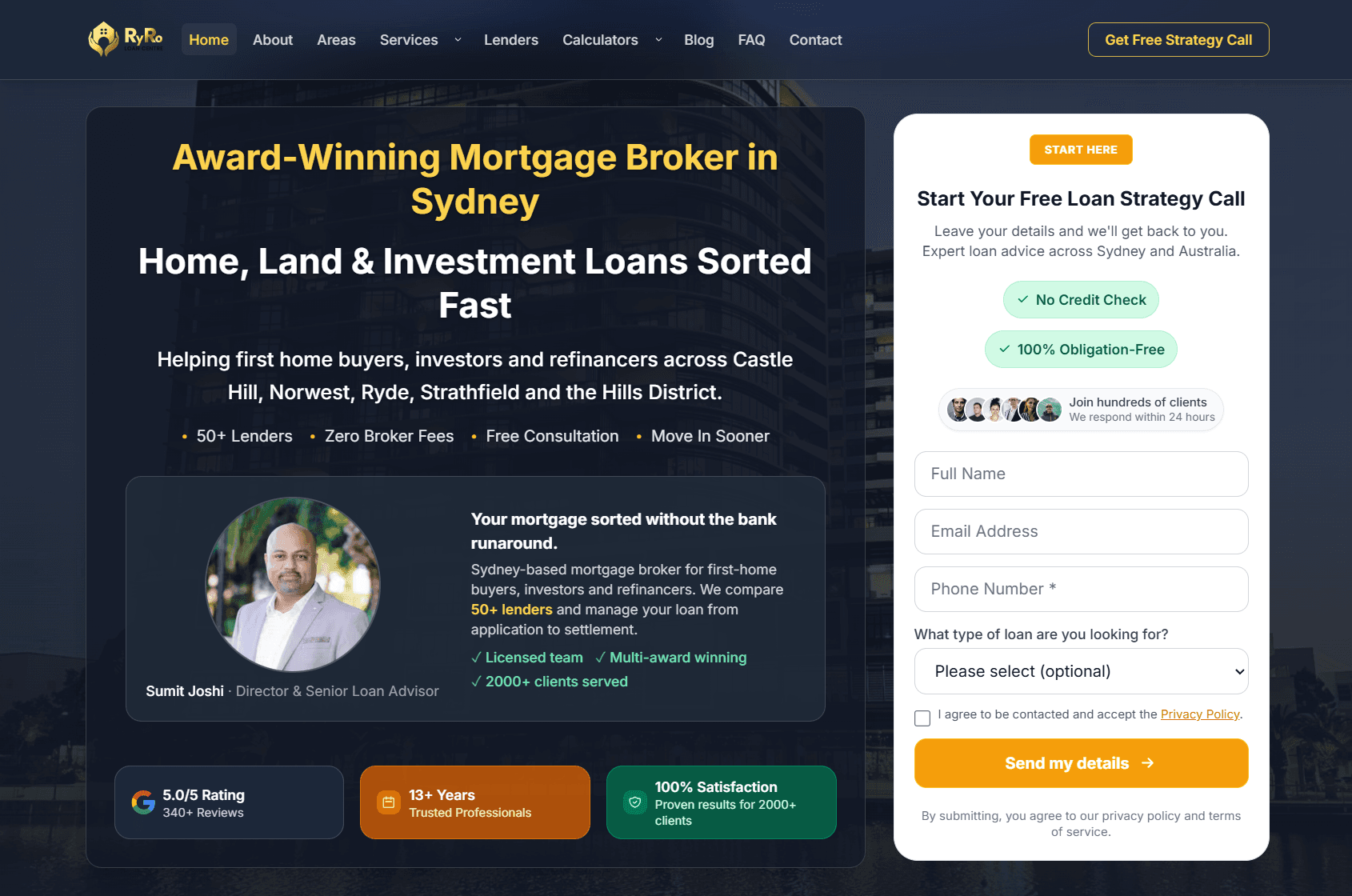
Real client. Real results.
RyRo Loan CentreFinance & Lending
Built a compounding organic asset across SEO, GMB, and AI search. After a 4 to 6 month build phase, RyRo now averages 15 to 20 qualified leads per month with zero ad spend. and the leads are higher quality than paid (fewer tyre-kickers).
Quick answers
Frequently asked questions
Tagged with
Written by
Guru, Founder at Vynlox
Sydney based · 8+ years building websites · 100% client retention
I started Vynlox after watching too many good Australian businesses get burned by agencies that send reports, not results. Every strategy call you book is with me directly. You won't be handed off to a junior. You work with me.


